Business Ideas for Small Towns I Found From a Tent Near Lonavala
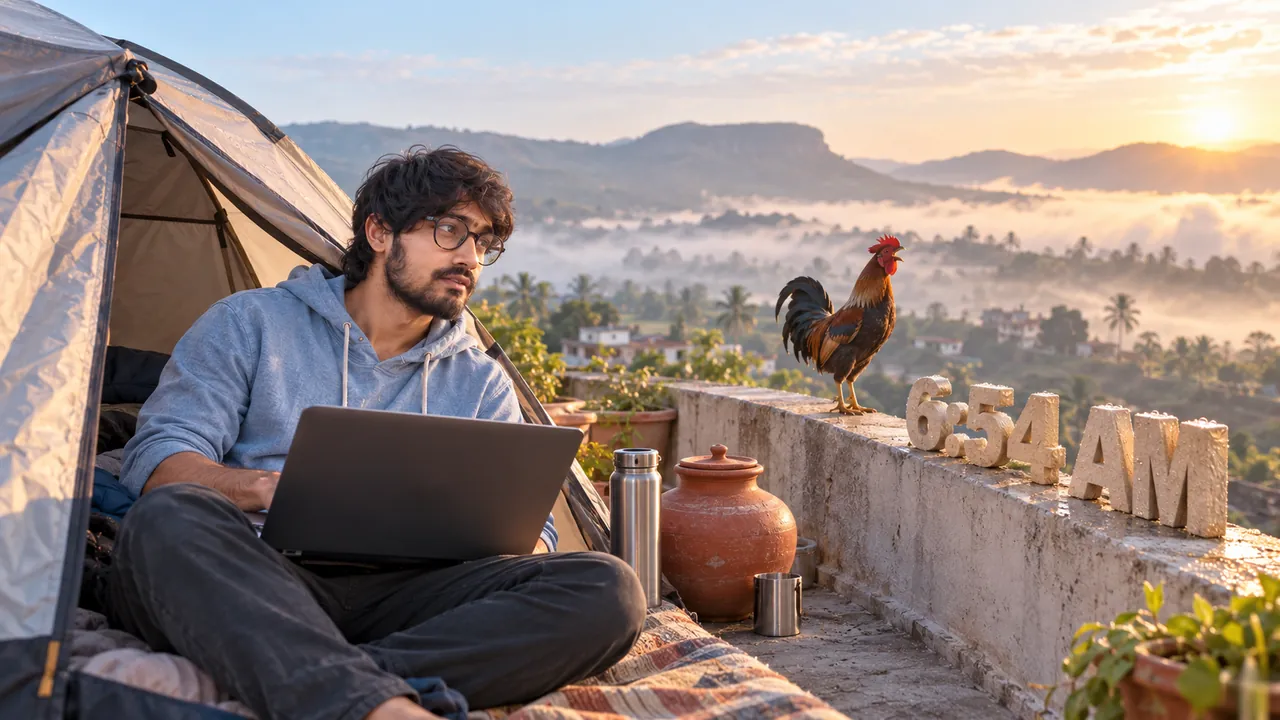
It is 6:54 in the morning and I am writing this from inside a tent. Not a hotel, not a homestay, not a resort with a pool and a view. A small dome tent pitched on the terrace of a family’s house in a hill village outside Lonavala, with the zip half open so I can watch the mist lift off the valley. Somebody’s rooster has been shouting since four. My back is a little stiff. My heart is very full.
I should warn you right at the start. This is not a neat article. It is not only about automation, and it is not only a list of business ideas. It is a biryani. A khichdi. A plate of pulihora, as we say in Telugu, where the tamarind, the rice, the peanuts and the curry leaves all go in together and somehow taste like home. There are business ideas for small towns in here, real ones, from people I met with my own eyes this week. There is a housemaid who became a teacher. There is a family that fed a stranger without asking his name twice. And there is some of my own story that I have not told properly before.
I did not want to skip a single day of writing, even on the road. So instead of pausing, I am bringing you along. Where I am, what I am doing, who I am meeting, and what each of them taught me about building a business with very little.
Read it slowly if you can. Every word here came from somewhere real.
What this tent taught me
6:54 AM on a Stranger’s Terrace: Why Business Ideas for Small Towns Start With People
Last night, somewhere between half past nine and ten, I was walking through the village with my bag on my back and nowhere booked to sleep. That was the plan, honestly. I bought this tent in Pune a few days ago exactly so I would not have to pay for campsites and rooms every night of this trip. It is a Decathlon tent. I did not buy it from Decathlon, though. I bought it from a third-party seller who buys from Decathlon and resells. The tent normally goes for somewhere around four to five thousand rupees. I bargained with the shop owner for a good while and walked out paying ₹2,850. Rupees, not dollars. I mention it because after everything we lost last year, I count every rupee now, and I am not ashamed of that.
Two or three people can sleep in it if they are built like me, which means not like a bodybuilder. Last night it was only me.
I asked a family on the edge of the village if I could pitch it on their terrace. They looked at the tent, then at me, then at each other, and then the man of the house laughed and said yes. That is how this article started. Not with research. With permission.
Why am I telling you about a tent in an article about business ideas for small towns? Because every good small-town business I have ever seen starts the same way: with a person, a relationship, and a little bit of trust given before any money changes hands. Metros run on footfall and strangers. Towns and villages run on people who remember you. If you understand that one difference, half of this article is already in your pocket.
What the Family Who Hosted Me Taught Me About Small Town Business Ideas With Low Competition
I want to tell you about this family properly, because they deserve it.
They are a tribal family, and I say that with pride, not as a label. This man owns his piece of these hills in a way no title deed can describe. He knows how to walk them at night. He knows which animals come down in which season and how to keep them away. He can cook on wood, farm a steep slope, climb where I would need a rope, fix his own roof, and live for days without a mobile signal or a single scroll of social media. If a storm cut this village off from the world tomorrow, he would be fine. I would be the one asking him for help. Everything he has, he built with his own hands and his own strength, without asking any city person for anything.
Last night they fed me. Egg bhurji, dal and chawal, hot from their kitchen. They would not take a single rupee. When I took out my wallet, the grandmother waved it away like I had said something rude.
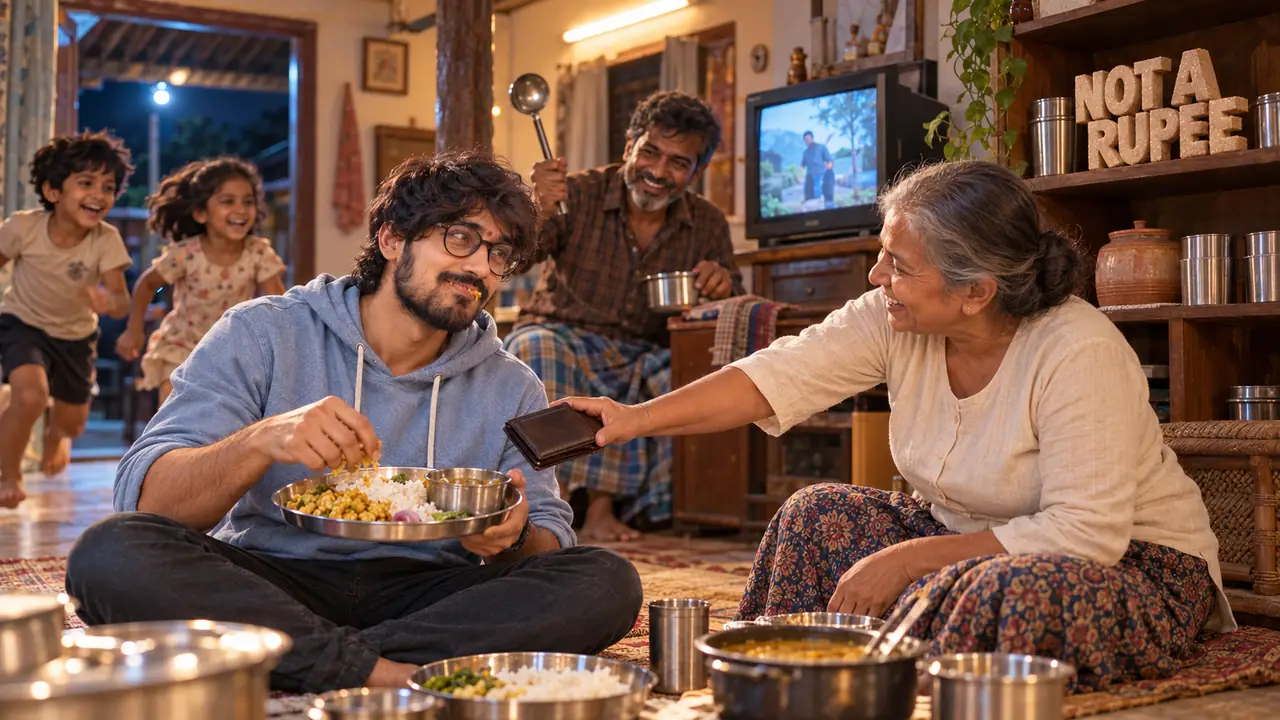
They asked me to sleep inside the house. But it is a small house. The children were still playing, someone was watching TV, the grandparents were settling in for the night. If a stranger lay down in that one room, nobody would sleep naturally. So I told them I would sit with them until the house went quiet, and then go up to the terrace. The terrace is very small. Their hearts are very wide.
Before I went up, they filled my water bottle. Then they gave me a clay pot of water as well, a proper matka, because the water stays cooler in it. And they gave me a small packet of village snacks, in case I woke up hungry at midnight. They treated me like a kid who had missed home and wandered up to a hill station by himself. Which, if I am honest, is not far from the truth.
Their Business Model: Rural and Semi Urban Business Ideas That Beat Metro Ideas
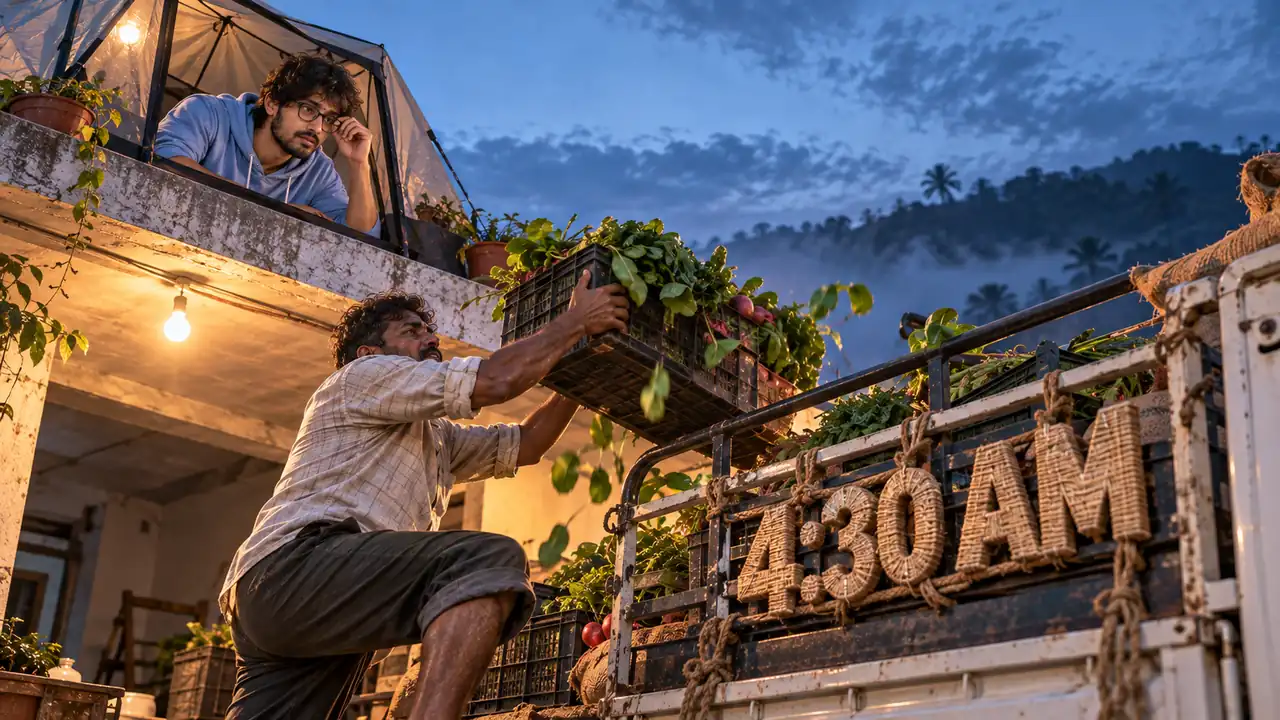
Here is the business lesson, and it is a serious one. This family sells what they grow and make. Vegetables from their slope, seasonal fruit, honey when the season allows, a few handmade things. They load it into their own vehicle in the early morning and drive it down to the town and the nearby villages. No wholesaler. No commission agent. No app taking a cut. When diesel prices jump, they feel it first, and they still do not raise their prices on regulars overnight. They decide the price, they meet the customer, they keep the margin.
This is the kind of small town business idea with low competition that no listicle written in an office will ever show you. There is almost no competition for honest, fresh, local produce sold by the people who grew it, because the buyer is not only buying the product. The buyer is buying the trust of knowing exactly where it came from.
| What they do | Why it works in a small town | What a metro would do to it |
|---|---|---|
| Grow and make their own produce | No purchase cost, full control of quality | Land and space would cost too much |
| Sell directly from their own vehicle | No middleman, they keep the margin | Traffic, permits and parking eat the day |
| Same route, same customers, every week | Trust and repeat buying do the marketing | Customers switch to the nearest cheaper option |
| Start at 4 or 4:30 AM | Fresh stock reaches buyers before anyone else | The same effort gets lost in the crowd |
One of them woke me up this morning. Not on purpose. He was already loading the vehicle at half past four, and the sound of crates being stacked is louder than any alarm. I lay in the tent and thought about how many founders I know who complain they cannot get up early, and here is a man who has done it every day of his working life without a single motivational video.
Business Ideas for Small Towns Around Tourist Places: What Lonavala Showed Me
I am not here to see the famous viewpoints. I did not come to explore the town. I came to explore people, the hearts behind the stalls. So for the last two days I have been sitting with every small business owner who would give me ten minutes.
The Maggi Stall: Small Town Retail Business Ideas Built on the Calendar

The Maggi vendor near the viewpoint road is the best business teacher I have met on this trip. His whole shop is a gas stove, two big vessels, a crate of noodle packets, some chopped onion and tomato, and a few plastic stools. On a rainy weekend he told me he sells more plates in a day than some cafés in Pune sell in a week. On a weekday in the off-season, he sometimes sells twenty.
His real skill is not cooking. It is reading the calendar. He knows the long weekends, the school holidays, the first heavy rain that pulls every college group up the ghat. He stocks for those days and survives the quiet ones. That is seasonal cash flow management, done by a man who has never heard the phrase. I wrote about how the slow months eat new businesses in my piece on money in the first six months of a small business, and this man lives that lesson every monsoon.
The Campsite Brothers: Business Ideas for Small Town Entrepreneurs With Family Land

A little further out, I met two brothers who run a small camping setup on their family land. Tents, a bonfire spot, a simple dinner, a guided walk in the morning. Their land would be worth a fortune in a city as real estate. Here, they turned it into an experience business without selling a single square foot. The overheads are low, the land is already theirs, and every happy group sends three more by word of mouth and Instagram stories. I showed them how a few short product videos of the bonfire and the morning walk could fill their quiet weekdays.
Their problem is bookings. Everything runs through phone calls and WhatsApp, and on busy weekends they double-book or miss messages while they are cooking. That is a gap I know how to fill, and I will come back to it below.
Produce on Wheels: Rural and Semi Urban Business Ideas at Their Most Honest
And then there are families like my hosts, who drive their own produce from the hills into Lonavala and the villages around it. Some have a small pickup, some a shared tempo, some just a two-wheeler with baskets tied on both sides. Rural and semi urban business ideas do not get more honest than this. The vehicle is the shop. The route is the marketing. The customer’s face is the review.
| Lonavala business | Setup cost | Busy season | Biggest gap I saw |
|---|---|---|---|
| Maggi and tea stall | Very low: stove, vessels, stools | Monsoon weekends and long holidays | No way to tell regulars when he is open |
| Family campsite | Low: tents and land already owned | Monsoon to winter weekends | Bookings lost in calls and chats |
| Produce sold from own vehicle | Low: own produce, own vehicle | Harvest seasons and weekends | No fixed list of regular buyers |
| Small homestay rooms | Moderate: rooms in an existing house | Weekends and festivals | Payments and advance bookings on trust |
None of these needs a big shop, a big loan or a big city. Every one of them is a business idea for small towns that would struggle in a metro.
Skill Based Business Ideas: The Story of Manemma, the Housemaid Who Became a Teacher
Now I want to tell you about someone who called me yesterday night, and who is the real reason this article exists.
Her name is Manemma. She is 49. I met her last year in a village in Uttar Pradesh, in the same district as Lucknow but about 180 kilometres from the outskirts of the city. She works as a housemaid in Lucknow. She had come home to her village because the families she works for had gone away for the weekend.
Here is something you probably did not expect. Manemma is educated. She was doing her BSc in Chemistry and had to stop in the second year because her family could not afford to keep her in college. She did not stop working, though. She became a housemaid, and she has become very, very good at it.
She told me she earns around ₹60,000 to ₹70,000 a month. I know some of you just read that line twice. I did the same when she said it. Her system is simple and brutally disciplined. She works in fixed time slots. One hour in one house, one and a half hours in the next, then the next, across the day, every day, on time. Her families trust her completely because she is never late and never careless.
And listen to this. When she wanted to go home for that weekend, some of the families did not want to give her leave. She asked anyway. Because she is in demand, they agreed, and she got four days off: Saturday, Sunday, Monday and Tuesday. Think about that. Many of us sitting in corporate jobs cannot get four days off even when we are sick. She got them because she is that good at what she does.
That first day, she chatted with me for half an hour. Later we spoke on the phone for more than an hour. She told me about her struggles and about her children. I remember putting the phone down and thinking: this woman is a business. She just does not know it yet.
The Idea: Sell Your Skills as a Course
In the big cities, there is a huge demand for trustworthy, skilled house help, and there are many women, and men, who want this work but do not know how to find good families, how to set a fair price, or how to keep a job for years. Manemma knows all of it. She has lived it.
So I asked her: Aunty, why don’t you teach this? Not as charity. As a course. People in their twenties, thirties and forties who want to start this work would pay to learn from someone who has done it this well for this long.
She laughed at first. Then she went quiet. Then she asked, “Who will listen to me?”
I told her I would build her a landing page.
How Manemma Turned Skill Based Business Ideas Into a ₹5,000 Course With One Landing Page
Last year, we built her a simple landing page. Nothing fancy: who she is, what she teaches, what it costs, how to contact her. No paid ads, no SEO audit, no funnel. Just a clean page that told the truth. I gave it to her as a free service. The person who designed the page was a freelancer I paid from my own pocket.
Yesterday night she called me. She now has three women in her course. Each of them paid ₹5,000, happily and with respect, because Manemma teaches them face to face, every day, for one month. By the end of it, they are ready to work as house help on their own.
| What Manemma teaches | Why it is worth paying for |
|---|---|
| How to find good families and the first customers | The hardest step for any newcomer |
| How to clean a home in a way that impresses the owner | Quality is what gets you kept and recommended |
| How to build a time-slot routine across several homes | This is where her income comes from |
| How to stay consistent and never be late | Trust is the real product |
| How and when to ask for leave, and when to take a day without asking | Knowing how owners think protects both sides |
| How to handle owners respectfully and set fair terms | Years of lessons in one month |
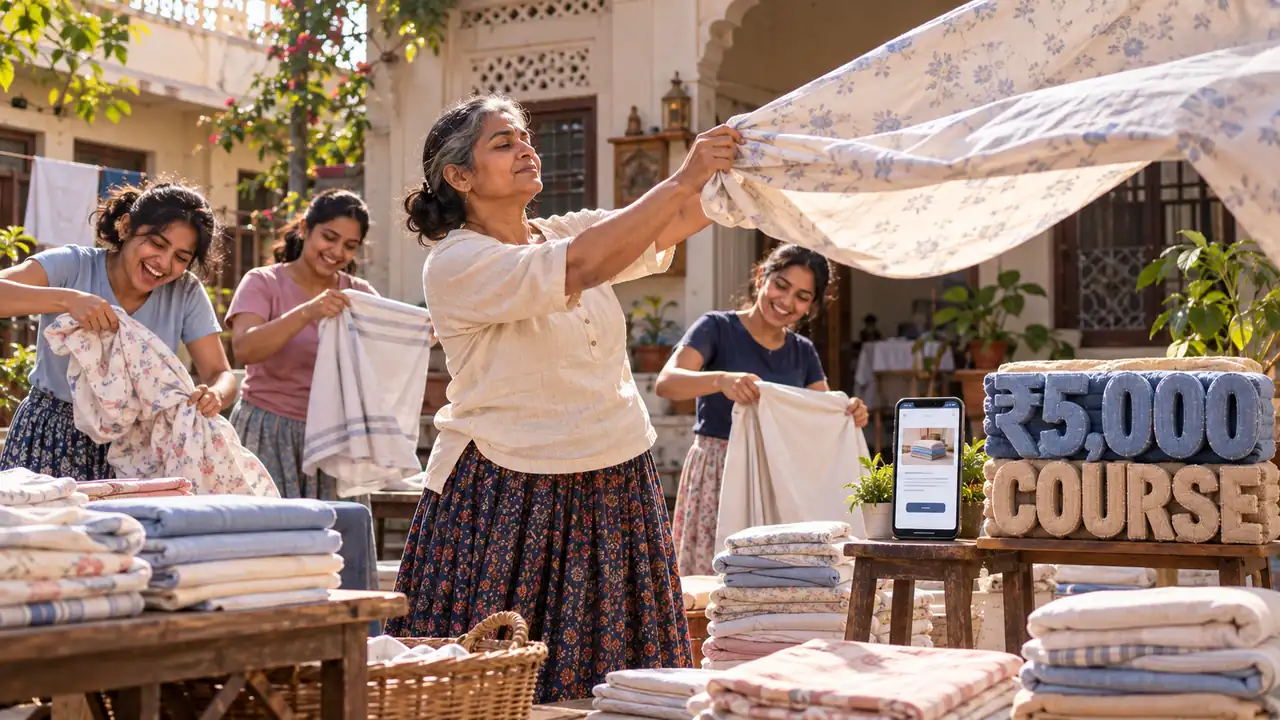
She shared every secret she has collected over the years, out loud, in front of her students. And here is the part that gives me goosebumps. Those three women are already planning to bring more people into the course. In a few years, some of them will become teachers too. One aunty’s experience is turning into a small school.
I want to be clear about one thing. This was not my idea. The skill, the discipline and the knowledge are all hers. All I did was find the right person and give her a free service at the right moment. That is the whole job, sometimes.
How to Sell Your Skills as a Course, Step by Step
If you have a skill that took you years to master, cooking, tailoring, driving, accounts, beauty work, house help, farming, repair, you can do what Manemma did. Here is the simple path I would give anyone.
- Write down what you do every day. Your routine, your rules, your mistakes and what you learned from each. That list is your syllabus.
- Pick one clear result. Manemma’s result is ‘you will be ready to work as house help in one month’. Clear results sell. Vague ones do not.
- Set an honest price. Ask what the result is worth to the student. For her students, one month of fees is recovered in their first few weeks of work.
- Teach in person or on a call first. Do not wait for a video studio. Your first three students are your proof.
- Get one simple landing page. Who you are, what you teach, the price, and how to reach you. A WhatsApp number is enough to start.
- Let students bring students. Happy students are your only advertising for the first year.
If you want to formalise it later, look at the Domestic Workers Sector Skill Council, which works on skill standards for domestic workers in India, and the ILO’s skill development programme for domestic workers. They show how seriously this sector is being taken, and they can help a home-grown course like Manemma’s add credibility as it grows.
AI Tools for Small Business: Where AI Fits in Manemma’s Course and the Lonavala Stalls
This article sits in our AI Wealth category, and I want to be honest about why. None of the people I have written about so far needs AI to run their business. Manemma needs discipline. The Maggi vendor needs a calendar. My hosts need their vehicle and their early mornings. But each of them has one or two jobs where a free AI tool would give them hours back, and that is exactly where AI for small business makes sense: as a helper sitting next to a real skill, never as a replacement for it.
Here is what I am now suggesting to each of them, and what you can try today with a free tool like ChatGPT, Gemini or Claude.
| Person | Job that eats their time | How AI helps | What stays human |
|---|---|---|---|
| Manemma | Turning years of experience into a course plan | Speak into the phone in Hindi, let AI turn it into a 30-day lesson plan and simple handouts | The teaching, the stories, the trust |
| Manemma’s students | Practising how to talk to new families | Role-play an owner interview with AI before the real one | The real interview and the real work |
| Maggi vendor | Telling regulars when he is open and what is on | AI writes a short WhatsApp status in Marathi, Hindi and English in seconds | The cooking and the chat at the stall |
| Campsite brothers | Answering the same booking questions all day | AI drafts quick replies and a simple booking form; a chatbot can answer the basics | The bonfire, the walk, the welcome |
| Produce sellers | Remembering who buys what on which day | AI turns voice notes into a simple buyer list and weekly route | Choosing the produce and meeting the buyer |
| Me | Writing landing pages for people like Manemma | AI helps me write landing page copy in hours instead of days | Knowing the person and telling the truth |
If you are new to these tools, my beginner’s guide to Claude Code shows how I use them myself, and my guide for solo founders covers the agent side. One warning, from someone who uses these tools every day. AI will happily write a beautiful course description for a skill you do not have. Do not let it. Use it to organise what you already know, translate it, and save time. The moment it starts inventing experience, close the tab. I wrote more about why most shiny AI agents fail real businesses, and the reason is almost always the same: no real person, no real skill underneath.
AI Tools for Small Business: The Simple Setup I Am Suggesting for Manemma’s Next Batch
When Manemma called last night, she asked me one thing: how can she teach more women without losing the personal touch? Here is what I told her, step by step, and you can copy it for any skill based business.
- Record, do not write. She speaks for ten minutes a day in Hindi about one topic: finding families, cleaning a kitchen properly, handling a difficult owner. Her phone records it.
- Let AI organise it. She pastes the transcript into a free AI tool and asks: Turn this into a lesson for women starting house help work, in simple Hindi, with five key points and three practice questions.
- Check every line herself. If the AI adds anything she did not say, she deletes it. Her experience is the product. AI is only the stenographer.
- Send one card a day on WhatsApp. Each student gets that day’s lesson as a short message and a voice note, so they can revise on the bus between houses.
- Keep the in-person class. The daily meeting stays exactly as it is. That is where the trust is built and where students practise for real.
Total cost: zero rupees, apart from the phone she already owns. Time saved: a couple of hours a week, which she can spend on a fourth student or on her own children. That is AI for small business the way I believe in it. Small, honest, and sitting quietly next to a real human skill.

AI for Small Business in Villages: The Automation Gaps I See on the Ground
I have built many automations for small businesses from my laptop. But a workflow built from a laptop only knows what the owner remembered to tell me. Sitting on a terrace in a hill village, I can see the gaps with my own eyes.
- Bookings for the campsite. A simple form and a confirmation message with a UPI link would stop the double bookings tomorrow.
- Payments for Manemma’s course. A payment reminder that goes out before each month’s batch, so she never has to ask awkwardly.
- Regular buyers for the produce sellers. A broadcast list and a weekly message saying what is fresh and which day they will come.
- Follow-ups after a stay. A thank-you and a review request, the same way shops follow up after a sale online.
None of this needs a developer. If you are curious how far you can go without hiring anyone, I wrote a full guide on how to automate a small business without hiring developers.
The People Who Cheated Me, the Mentors Who Stayed, and What Business Ideas for Small Towns Really Run On
Last night, after the house went quiet, I lay in this tent and could not sleep for a long time. When you travel alone, the past comes and sits beside you without asking.
I thought about the people who cheated me. Some did it in the name of help. Some did it in the name of trust. Some did it in the name of values, which hurts the most, because they used the same words I live by. Some took money from me and never returned a single rupee. I am not going to name anyone here, and I never will. That is not how I want to live, and it is not what this platform is for. I am only telling you that it happened, because many of you reading this have been through the same thing and think you are the only one.
Then I thought about the people who stood with me. The mentors who picked up the phone at midnight. The friends who said nothing and just sent food. My family, who never once asked me to give up, even when I was close to doing it myself. Some of them are still standing with me today. I do not say thank you to them often enough. So, from this tent, thank you.
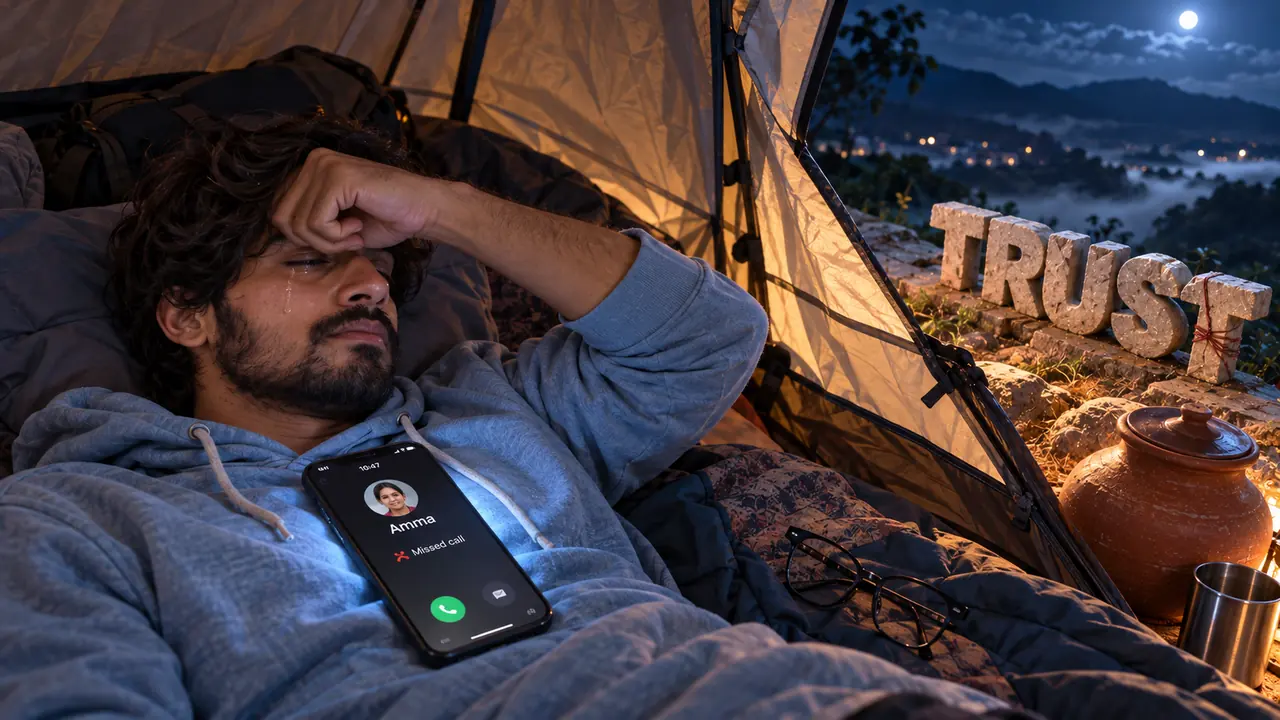
And then I thought about Manemma, and the family sleeping downstairs, and the man loading his vehicle at 4:30 in the dark. None of them had an easy start either. None of them waited for someone to rescue them. They built themselves from scratch, one day at a time. Lying there, I realised I am not inspired by big founders on stage anymore. I am inspired by a housemaid in Lucknow and a farmer in the hills of Lonavala.
If there is one lesson here for small town entrepreneurs, it is this: in a small place, trust is your real capital. Protect it more than money. Money can be earned back. A broken name in a small town follows you for years.
We Sold a Domain, Not Our Trust: Why Ethical Founder Still Gives Free Help With Business Ideas for Small Towns
This is my first real trip after a big bounce back, so let me clear something up, once and for all, because people still ask.
We sold the .com domain. Only the domain. Not the content. Not the work. And definitely not the trust. I sold it to keep my promise to the freelancers who worked for me, and to everyone who trusted me. When the work grew beyond what I could manage alone, and I had no automated systems to carry it, I paid freelancers a huge amount from my own pocket so that nobody’s work stopped halfway. If you want the full story, it is on the Who Is Ethical Founder page.
I have never taken a single rupee from any zero-investment entrepreneur or business dreamer who came to us for free help. Not one.
And I mean this as an open challenge. If there is anyone out there who was told something was free and was then charged even ₹100, come to the comment box below and say it loudly, in public, where everyone can read it. I want to see your face. I am not saying this out of anger. I am saying it because I know the answer.
The proof is not in what I write. The proof is that people still call me. From villages like the one I am sitting in right now. From villages in Uttar Pradesh, where people took our templates, our automation templates and our help with building their first pages. From housemaids like Manemma, who still call to tell me how their course is going. Trust does not need a .com.
Business Ideas That Fail in Metros but Work in Towns
Now let me give you the practical side, because emotions alone do not pay rent. The young people I meet who want to go back to their towns always face the same question from someone at home: “Who will buy there? Everyone with money has left.” It is a fair worry, but it only looks at half the picture.
What a Metro Has That Business Ideas for Small Towns Must Work Around
- Density. Thousands of people pass a city shop every day. A town has a few main roads and a market, and footfall drops sharply after that.
- Niche buyers. A city has enough people for vegan bakeries and vintage watch repair. A town might have five households who want each.
- Fast money. City customers try new things quickly. Town customers compare, ask a neighbour, and take a season to trust you.
- A supplier network. Same-day suppliers, technicians, printers and packaging vendors on every street.
What a Small Town Has: Small Town Business Ideas With Low Competition
- Low rent. Often a fraction of a city shop, or a ground-floor room the family already owns. This is why business ideas benefiting from lower rent belong in towns.
- Thin competition. One shop, or none, or one that stopped trying because nobody ever challenged it.
- Trust that compounds. People remember who fixed their fridge honestly and who delivered on time, and they send their relatives.
- Loyal staff. People prefer a job near home, and a good employer keeps them for years.
- City tools, town costs. UPI, WhatsApp catalogues, Udyam registration from a phone, and AI tools that cost nothing. The gap in tools has closed. The gap in costs has not.
| Business type | Metro fit | Small town fit |
|---|---|---|
| Appliance and phone repair | Crowded, competes with service centres | Strong, honesty and word of mouth carry it |
| Furniture workshop with showroom | Weak, space is expensive | Strong, cheap space and buyers who want to touch |
| Specialised niche boutique | Strong, enough niche buyers | Weak, too few buyers |
| Hardware and electrical shop | Moderate, many competitors | Strong, constant building and renovation |
| Paperwork and form-filling centre | Moderate, many online options | Strong, people want someone they trust |
| Skill course taught in person | Moderate, lots of online competition | Strong, a known local teacher fills batches by word of mouth |
| Experience business on family land | Weak, land is too expensive | Strong, the land is already yours |
| Storage for traders and farmers | Weak, rent eats the margin | Strong, steady demand and low rent |
Low Investment Business Ideas for Tier 3 Towns and Villages
If you have very little capital, start with what you know. Most of the strongest low investment business ideas for tier 3 towns are skill-based or service-based, exactly like Manemma’s.
| Idea | What you need to start | Where AI saves you time |
|---|---|---|
| Teaching a skill you have mastered | Your experience, a phone, a room | Course plan, handouts, translations |
| Tuition and spoken English classes | Subject knowledge, a room | Practice questions and lesson plans |
| Tailoring and alterations | A machine and skill | Order list and pickup reminders |
| Tiffin service for students and workers | Kitchen, containers, FSSAI registration or licence | Weekly menu and order tracking |
| Paperwork and form-filling help | Phone, printer, patience | Checklists for each type of form |
| Mobile repair van for villages | Tools and a two-wheeler | Route plan and booking messages |
| Campsite or homestay on family land | Land, tents or a spare room | Booking replies and guest guides |
| Selling your own produce from a vehicle | Produce and transport | Buyer list and weekly route |
Small Town Retail Business Ideas and Rural and Semi Urban Business Ideas
A town is also the market hub for all the villages around it. A well-run kirana with home delivery, a hardware and sanitary shop that delivers to building sites, an agricultural inputs store that understands the local crop cycle, equipment rental for farmers, or a parcel collection point. These small town retail business ideas rarely make sense in a metro and can be very steady in a town. Also look up your district under One District One Product. If your district’s product is a craft, a food or a crop, there may be room for a business that processes, packs or sells it.
If you need a loan, the MUDRA scheme was built for small non-farm businesses, with loans in stages starting from Shishu, then Kishore and Tarun, so you can begin small and borrow more as you prove yourself. Check the current limits on the official site before you walk into a branch, and read what SIDBI expects from an MSME. Once your turnover crosses the threshold, register on the GST portal, and if you sell food, get your FSSAI registration or licence first. Small towns do not mean small rules.
Four Questions Before You Choose Business Ideas for Small Towns
- Who will pay, and how many of them are there? If you cannot name a few hundred likely customers, the idea may need a bigger market.
- Who already serves them, and what do they do badly? Walk the market. Listen to what people complain about.
- What will it cost every month, and how many customers does that mean? Count everything, including your own living costs.
- Does it depend on something a town lacks? Heavy footfall, a narrow niche, impulse buying or a city supplier network.
An idea that passes all four is one of the business ideas suited to a smaller market, and you can plan it with confidence. Manemma’s course passes all four. So does the Maggi stall. So does my hosts’ vehicle full of vegetables.
Business Ideas for Tier 2 Cities India Founders Can Learn From a Tent
Some of you live in tier 2 cities, between the town and the metro, with more footfall than a village and much lower costs than Mumbai or Bengaluru. Everything in this article applies to you too, with one change: you can support slightly more specialised trades, a fitness studio, an event company, a small design agency for local shops. But the rule does not change. Build around people who will remember you. Start with what you already know. Use AI and automation to save time, not to fake experience.
And travel, if you can, even on a budget. I would not have met Manemma, or the Maggi vendor, or the family downstairs, from a hotel room. If you have money for five-star rooms and guides, go ahead, enjoy it, I have nothing against it. My budget right now is a tent and a bargained ₹2,850, and I am caring about every rupee because we lost so much. But I promise you, the cheapest way to travel is also the best way to learn business: sit where the people sit.
Share Your Business Ideas for Small Towns: Let’s Build a Healthy, Wealthy Community
Here is my request, and it is a sincere one.
If you have a business idea, share it in the comments. Any idea, small or big, rough or polished. We will think about it seriously, shape it properly, and put it where it can actually help someone, including the people who are looking for good ideas and are willing to pay for them. Someday soon, I want to turn all of this into a proper business ideas database, built from real people and real places, not from office guesses. Soon. Very soon.
If you want to help, come forward. You can join us and get paid for your work, or you can give a free service to someone like Manemma through our platform. Both are welcome. Let us build a healthy and wealthy community where nobody is cheated in the name of help.
Someone from another state calls me and asks, “Beta, khana hua kya?” Someone from my own state calls and asks, “Em chestunnav anna?” And a family in a hill village I had never seen before gives me food, water, a clay pot and a corner of their roof without asking for anything. I am not a five-star traveller. I want to stay humble, loyal and grateful, and that is all I am trying to be on this trip.
The comment box is yours. Positive or negative, I read everything. And I need only one thing from you: your blessings. That is more than enough.
The sun is fully up now. The mist has gone, the vehicle downstairs has already left for the market, and the children are asking if the uncle in the tent is awake. I am. I am going to fold this tent, thank my hosts, and go meet the next small business owner on this road. I will tell you about them tomorrow.
Questions People Ask Me About Business Ideas for Small Towns
What are the best business ideas for small towns in India?
Businesses that need space, trust and steady local demand: repair shops known for honesty, hardware stores that deliver to sites, paperwork help centres, tuition and skill courses, food production units, storage for traders, campsites or homestays on family land, and selling your own produce directly from a vehicle.
Can I sell my work experience as a course?
Yes. If you have mastered a skill over years, write down your daily routine and rules, promise one clear result, set an honest price, and teach your first students in person. Manemma, a housemaid from Uttar Pradesh, now teaches a one-month course for ₹5,000 per student with one simple landing page.
How can AI help a small business in a village or small town?
Use free AI tools to organise what you already know: turn voice notes into lesson plans, write WhatsApp messages in local languages, draft booking replies, and keep buyer lists. Never let AI invent experience you do not have.
Do small town businesses need GST and FSSAI registration?
Yes, the rules are the same everywhere. Register on the GST portal once your turnover crosses the threshold for your business and state, and get FSSAI registration or a licence before selling food. Udyam registration is free and online.
Which loans help small town entrepreneurs start?
The MUDRA scheme gives loans to small non-farm businesses in stages, starting with Shishu, then Kishore and Tarun. Check current limits on the official MUDRA site and see what SIDBI expects from an MSME before you apply.