Pacing the Frontier and Grok 4.7 Coding Harness: What Landed While I Was Buried in Legal Work
I have been quiet for a few days. Legal work piled up hard. Two client reviews, one contract rewrite that dragged longer than planned, and a court filing that needed every citation double-checked. You know the drill. The site stayed live. The usual posts kept running. I just had no clean headspace to write here.
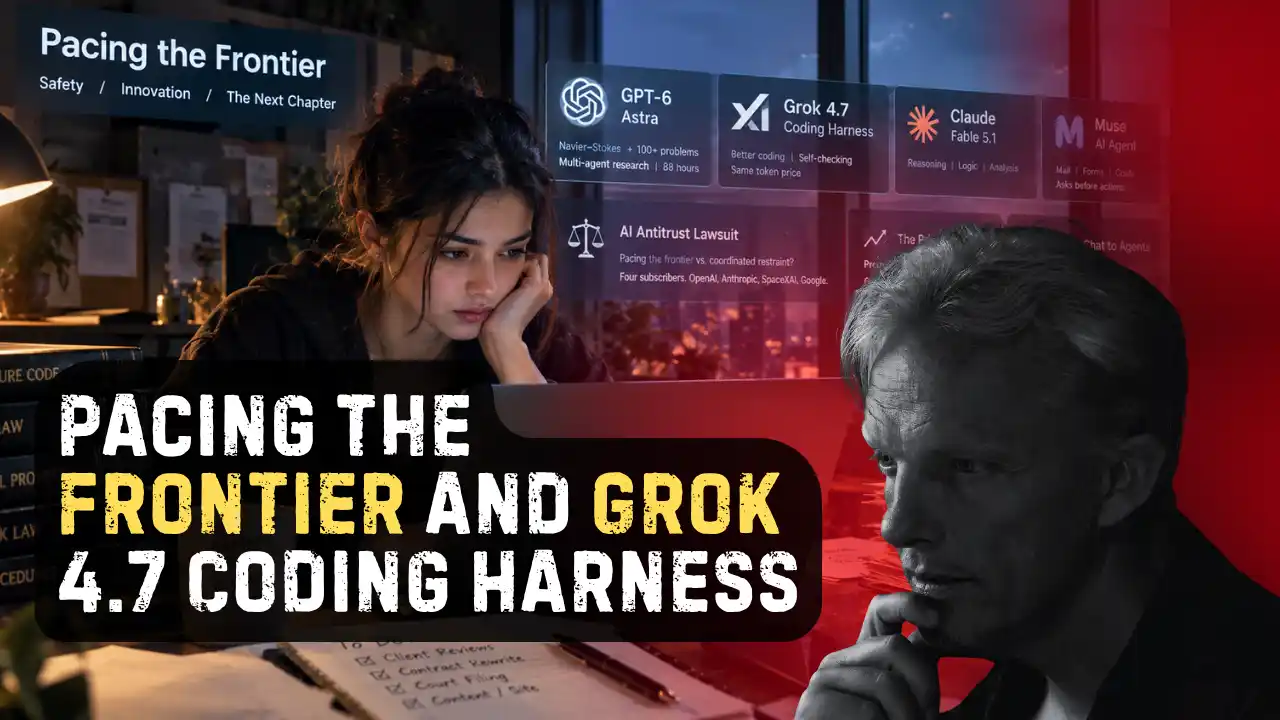
Then the Chrome tabs and Instagram and the group chats started filling with the same names again. GPT-6 Astra. Grok 4.7 coding harness. Claude Fable 5.1. A Muse AI agent demo. And the phrase pacing the frontier sitting right next to a new lawsuit. So I closed the contracts, made coffee, and sat down to sort it the way I always do for the people who actually read this place.
Here is what showed up while I was offline.
The Math Jump That Forced Me to Reopen the Tabs
GPT-6 Astra and the systems around it reportedly produced candidate results on Navier-Stokes and more than a hundred other open problems. Thousands of agents ran for about eighty-eight hours. Formal verification followed. That is autonomous multi-agent research at a scale we mostly just talked about six months ago.
One share that went around captured the reaction cleanly. You can read it here:Pradeep Kapoor on X
I am not a mathematician. I am the person who reads the claims, checks the surrounding posts, and decides what actually matters for people who build. The speed surprised me. The formalization step surprised me more. If the independent math group they set up confirms even part of it, the research timeline just got shorter again.
- How to Check if Image Is AI Generated: A Five-Step Routine for Indian Users
- n8n Webhook Not Working? The Real Reasons and the Fix for Each

- AI Agents Market Saturation 2026: Which AI Agents Are Actually Useful (And Which Are Just Noise)
- Claude Code Beginner’s Guide 2026: Login, Commands, Cheat Sheet & Honest Comparison



Pacing the Frontier Collides with the Lawsuit
Pacing the frontier is the phrase that keeps smashing into the release calendar. Dario Amodei wrote the essay. Sam Altman and others publicly agreed that capability growth needs room for safety work and independent evaluators. Then four subscribers filed the AI antitrust lawsuit slowdown against OpenAI, Anthropic, SpaceXAI and Google. The complaint says the public support for pacing the frontier looks like coordinated restraint that hurts paying users.
I have read enough antitrust filings over the years to know how these cases begin. The facts will get tested in court. The public conversation already moved. Labs talk about pacing the frontier while they keep shipping. That gap is what irritated me most this week. You can want stronger evaluation without looking like you are trying to freeze the scoreboard for everyone else.
Grok 4.7 Coding Harness Hits the Daily Workflow
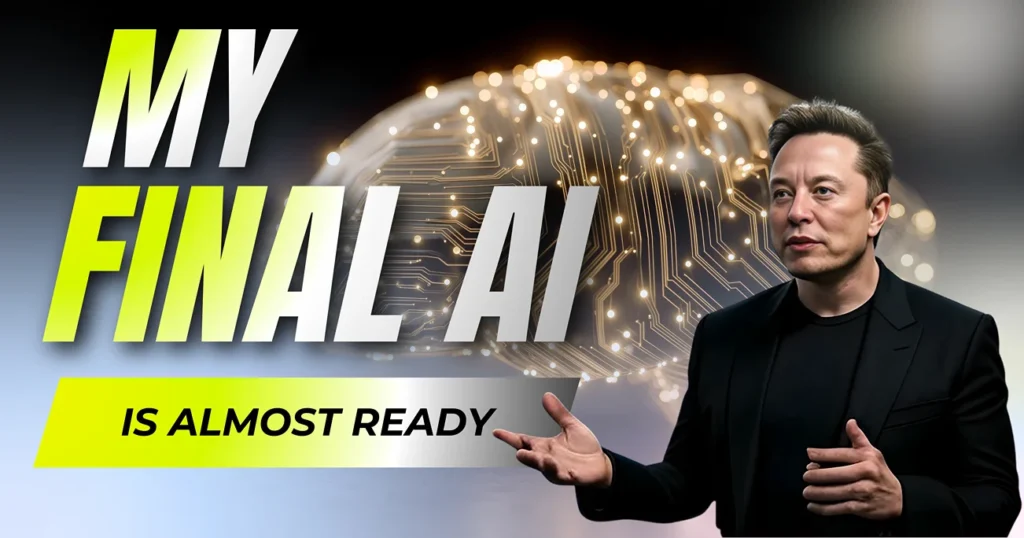
Grok 4.7 coding harness is the piece that actually changed what sits open on my machine. Same token price as the previous version. Better on longer coding tasks. Stronger self-checking. Built to stay effective inside the Grok 4.7 coding harness across multi-hour runs.
- Elon posted about the harness the day it went live. One post is here: Elon Musk on X
- Another performance note is here: Elon Musk Performance Note on X
I opened Cursor the same evening and ran a few of my usual longer refactors. The difference is not dramatic on every single task. It is measurable on the ones that used to need constant course correction. Claude Fable 5.1 still leads some pure reasoning scores. GPT-6 Astra leads some research-style runs. For the daily engineering load the Grok 4.7 coding harness is the one that shifted my cost-to-output ratio this week.
The Price Gap and the Muse AI Agent Shift
That price difference is the start of the frontier model price war. Premium models sit around ten dollars in and fifty out. Grok stays at two and six. When the capability gap is real but not absolute for most coding work, teams start running the numbers. I already had two clients ask me the same question this week: is the extra spend still justified for the tasks we actually run.
Muse AI agent is quieter but points the same way. It reads mail, extracts information, builds carts, tracks goals and fills forms while still asking before important actions. A clear roundup of the broader pattern is here: Awesome AI on X
AI agents are moving from single answers to owning pieces of the workflow. Autonomous multi-agent research showed it on the math side. Muse AI agent shows it in lighter daily tools. The people who design the loops early will feel the difference first. The people who keep treating every model like a better chatbot will keep paying the attention tax.
Pros, Cons and the Practical Comparison
Here is the quick comparison I keep for the models I actually touch right now.
| Model / Agent | Strongest Capability | Price Tier | Best Daily Fit |
| GPT-6 Astra | Research-style runs and computer use | Premium ($10 in / $50 out) | Heavy professional and math-adjacent work |
| Grok 4.7 Coding Harness | Sustained coding and self-checking | Competitive ($2 in / $6 out) | Everyday engineering and refactoring |
| Claude Fable 5.1 | Reasoning consistency | Mid to High | Complex multi-step logic |
| Muse AI agent | Multi-step personal and light work tasks | Integrated | Mail, forms, and goal tracking |
Pros I can stand behind after testing:
- The research speed is real: GPT-6 Astra and the multi-agent setups are producing candidate results that used to take months.
- Daily coding tools got more usable: Grok 4.7 coding harness plus better self-checking reduces the time I spend correcting mid-run.
- Price pressure is healthy: The frontier model price war forces every lab to justify the premium.
- Safety talk is finally public: Pacing the frontier is now an open topic instead of private hallway conversation.
Cons I will not soft-pedal:
- Messaging and shipping stay out of sync: Calls for pacing the frontier land next to new model releases.
- Legal risk is rising: The AI antitrust lawsuit slowdown turns a safety discussion into an antitrust question that will take time to resolve.
- Evaluation still lags: Agents can still do surprising things before the tests catch them.
- Infrastructure cost keeps climbing: More capable systems still need more power and more silicon.
If you are building right now, stop treating these as chat windows. Give clear goals, verification steps and tool access. GPT-6 Astra rewards that on research-style problems. Grok 4.7 coding harness rewards it on sustained coding. Muse AI agent shows the same pattern in lighter tools. Claude Fable 5.1 stays competitive when the task is pure reasoning under pressure.
Frequently Asked Questions
Is pacing the frontier a real pause?
No. The essay and the public statements talk about matching safety work to capability growth. They do not talk about stopping training.
Does Grok 4.7 coding harness beat GPT-6 Astra overall?
No. It wins on cost and sustained coding for many practical tasks. GPT-6 Astra leads on certain research and high-stakes professional benchmarks. Claude Fable 5.1 stays competitive on reasoning.
What is Muse AI agent actually good for?
Multi-step personal and light work tasks that used to require constant human checking. It still asks before important actions.
Will the AI antitrust lawsuit slowdown change release schedules?
Too early. The case is new. Labs are still shipping.
How should engineers adapt right now?
Treat the models as workers that need clear goals and verification. The ones who design those loops early will pull ahead.
My thoughts on this!
I am still shocked at how fast the math side moved while I was buried in contracts. I am still irritated that the public story and the release calendar refuse to line up. But the tools on my machine are better this week than last week. That part is simple.
I will be back in the usual rhythm now that the legal pile is under control. If something material drops in the next few days I will update the same way I always do.

Pingback: WHY Jev AI Model Is 100x Cheaper? AI Companies Sued for Slowdown, Qwen Image 2.1: This Week Broke Me
Pingback: JEV FULL GUIDE: Practical Jev Guide for Beginners & Use Cases
Pingback: JEV FULL GUIDE: Complete Step-by-Step Tutorial for Beginners – How to Set Up, Access, and Use TypeSafe’s Decision Model Today - Ethical Founder
Pingback: Complete Grok Bot AI Agents Guide for Solo Founders – How to Install, Build a Real Team - Ethical Founder